
From Covid-19 essentials, such as Vitamin C supplements and thermometers, to bicycles, laptops, and personal weighing scales, demand for certain items galloped during last financial year as the pandemic altered what Indians used on a day-to-day basis. Imports of outdoor sports equipment, handbags for women, and dentures, among others, plummeted. With outdoor activities coming to a halt last year and schools functioning virtually, imports of sports goods witnessed a decline, while inbound shipments of laptops and battery chargers saw a sharp uptick, according to the import data for the financial year 2020-21.
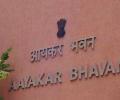
Amid economic uncertainties owing to the pandemic, the government's key revenue agency, the Income Tax Department, has close to 400 vacancies at commissioner level and above, affecting its functioning. Seventy-three of the 91 chief commissioner positions are lying vacant, with some for more than a year. Chief commissioner is the second-highest post in the department, below principal chief commissioner, which is at par with secretary in a ministry.
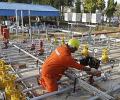
It is rare for Cabinet ministers to tick off state-owned companies publicly, yet that was what then petroleum and natural gas minister Dharmendra Pradhan did for ONGC. Speaking at an event on June 29, Pradhan said he has asked India's premier exploration company to find fresh oil acreages fast. "Do it yourself through some joint venture (or) through a new business model. But the government cannot permit you to hold resources for an indefinite time." The reason for this stricture is India's rising dependence on imported oil and gas. Or, to put it another way, falling domestic production (see chart: "Crude truth"), especially from ONGC, which faces a simple problem.
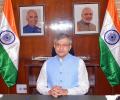
From trusted bureaucrat, to Wharton, MNC executive to businessman, and now politician, the man in charge of two weighty ministries is a unique all-rounder with specialist knowledge.

India conceding ground to bring only top 100 digital companies like Google, Facebook, and Netflix into the global taxation pact may have revenue implications. This will mean that New Delhi will have to withdraw the contentious 2 per cent equalisation levy on e-commerce operators by 2023. This may have revenue implications for India, experts pointed out, as the equalisation levy has a much lower annual revenue threshold of Rs 2 crore (euro 0.2 million) as against euro 20 billion agreed by 130 countries at the Organization for Economic Cooperation and Development (OECD). India, along with other developing countries, was pitching for at least euro 1 billion threshold to cover at least 5,000 global entities. India collected Rs 2,057 crore from the equalisation levy in 2020-21, an 85 per cent growth over Rs 1,136 crore in the previous fiscal.

'From the tiniest to mid-level organisations and even some at the lower end of the large-scale ones would say that computerisation and the extensive documentation and regulatory requirements for GST have made the compliance process worse in many cases.'

Among all the geographies where Amazon is fighting regulators, India is the only place where its lines are also tangled in a major corporate battle, this one with India's largest company by market capitalisation over the acquisition of Mumbai-based Future Group's retail chain, the country's second largest. No other corporate entity in any country offers a challenge to Amazon's hegemony in a way Reliance Industries does - and the final hearing of an arbitration case filed at the Singapore International Arbitration Centre between the two may decide at least some of these issues. This legal battle between one of the world's most powerful corporations and one of India's most powerful conglomerates could be complicated by a host of other developments.
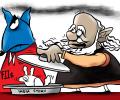
IT, FMCG and manufacturing sectors are less attractive to foreign portfolio investors

North Block is concerned that when India is trying to attract more investment, putting up restrictions on audit firms could create an avoidable bad advertisement.

'I'll give it to the vaccine manufacturers without guarantees, take the payment in advance and give me the supplies.' 'The moment you give me one lot of supply, I'll give you more.'


The vacancies are learnt to be impacting the I-T department's day-to-day functioning.

People working at the Nigambodh Ghat -- perhaps the busiest cremation site in the national capital in the wake of outbreak of the pandemic -- go about their job with resilience, helping in whatever way possible.

GST mop-up likely to fall in May, June after touching record levels in April and March.

E-way bill generation, which is related to paying Goods and Services Tax (GST) and a key high-frequency indicator of economic activity, may have fallen to a five-month low in April as more cities experience lockdowns due to a surge in Covid-19 cases. In April e-way bill generation may decline to 55-58 million, which is the lowest since at least November. On the higher side, it is a 17 per cent decline over March.

Though COVID-19 will wreak more damage to the finances of the Indian population, the insurance sector is unlikely to get hurt.

While players in the financial ecosystem are opening up to the idea of receivables funding for the sector, this market needs a regulator, which a Parliament panel feels only RBI can provide.

US proposal to raise the global corporate tax rate to 28% from 21% might face resistance from countries unwilling to give up their edge and compete with America on its terms.

The group has called for a retaliatory tariff action against India, if New Delhi does not roll back the 'unilateral and discriminatory' equalisation levy or Google Tax.

They say that a stimulus package may not be necessary because, unlike last year's total lockdown, public transport, including the railways and airlines, is running and the restrictions on movement are localised and, in some cases, are partial rather than total.
